

One of the most common questions I get from expecting parents is: what are the must-have items I need to buy for feeding?
Before I start, I should emphasize that if you plan to breast/chestfeed, there is actually *nothing* you absolutely have to have starting out. Yes, you read that right: nothing!
You could literally purchase zero things beforehand, get off to a fine start, and simply purchase any items you decide would be helpful or improve your experience afterwards.
There is one thing that is hard to get by without, though. Know what it is?
Support.
When you’re putting together your registry, PLEASE prioritize funds for education & support! This includes (but is by no means limited to):
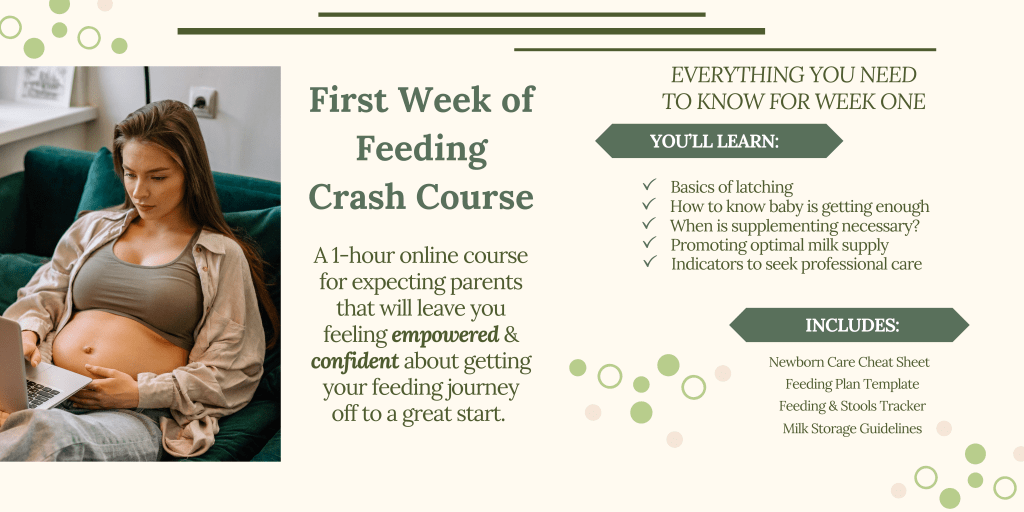
- a prenatal feeding class (psst…I offer virtual and in-person options!)
- a postpartum lactation consult (may be covered by your insurance!)
- other postpartum care: meals/meal service, a postpartum doula, pelvic PT, dog walker, and more
If this sounds like a great idea, Be Her Village is an organization that allows you to build a registry for support. Check it out!
All that said, there ARE a few tangible items that can be helpful for your feeding journey. We’ll discuss my must-haves, nice-to-haves/might-needs, and definitely-skips.
Disclaimer: If you purchase through the affiliate links below, I may earn a small commission. I use affiliate earnings to fund my sliding scale consults. All products are my authentic, personal recommendations; none are sponsored. Thanks for supporting my small business!
Must-Haves
Nursing Pads
Leaking is common in the early weeks while your milk supply is regulating, and reusable nursing pads are great for being able to stick in your bra to prevent your shirt from getting soaked. I recommend cotton, bamboo, or another natural fiber. My favorite option is these from Kindred Bravely.
Nipple Cream/Butter
While it’s important to know that persistent nipple pain or damage is never normal, it is common for parents to experience some tenderness and sensitivity while learning how to latch effectively in the early days and weeks. I recommend a brand with as few ingredients as possible, like Earth’s Mama, Motherlove, or LactationHub.
If you experience nipple pain or damage, please reach out for help!
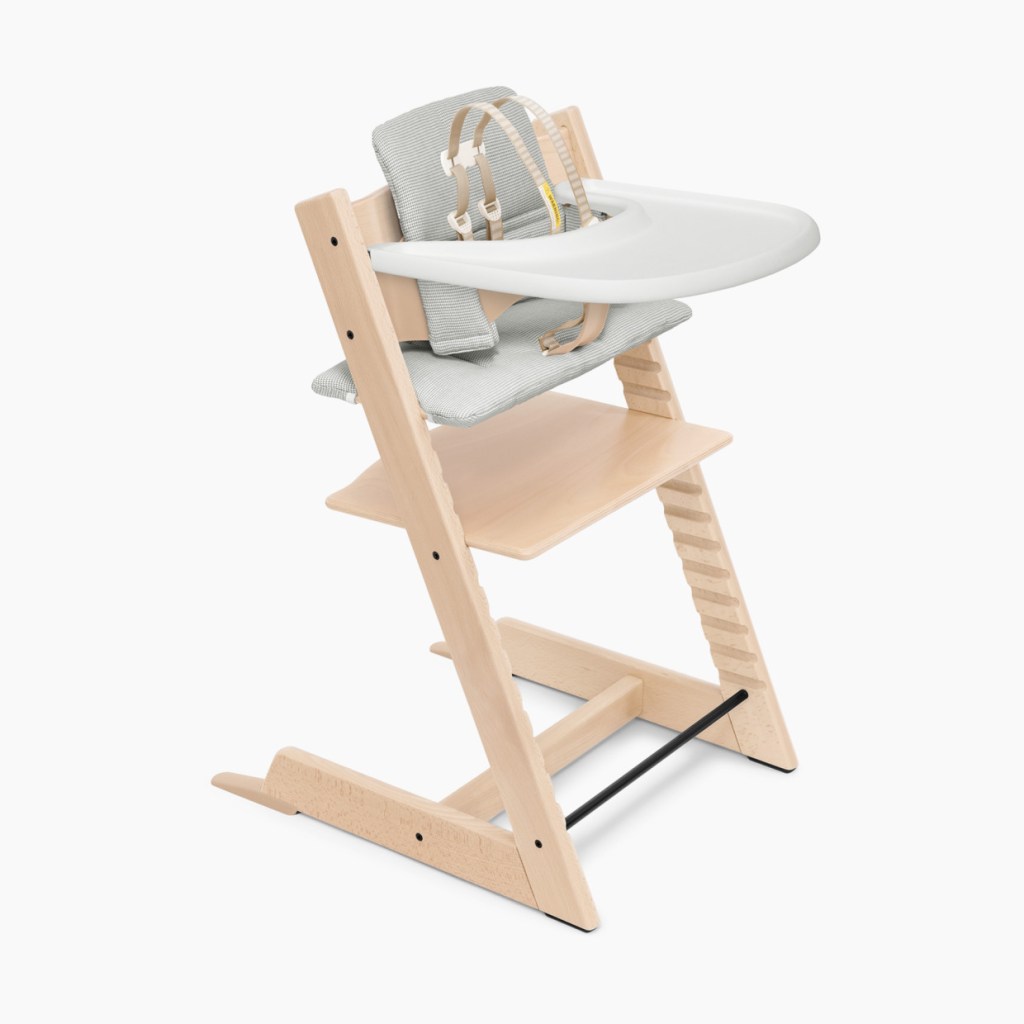
A High Chair with a Footrest
No, you won’t need this for awhile, but a good quality high chair can be expensive, so I like to mention them to pregnant folks so they can add them to their registry (or start your secondhand search early). A footrest is essential for optimal posture & safety while eating.
There are a variety of high chair options at different price points. My favorite (though by far the most expensive) is the Stokke Tripp Trapp. Pricey, yes, but worth the investment for its longevity (my 5-year-old still uses hers). You can also buy a standard high-chair and add a DIY footrest.
Returning to Work Must-Haves
If you’ll be returning to work outside the home or otherwise planning to be away from your baby on a regular interval, these are also must-haves:
Trustworthy Double Electric Pump
This one is really, really important. If you are going to be reliant on a pump to maintain your milk supply during the day, choosing a hospital-grade pump is critical. I’ve seen my share of low supply consults linked entirely to the parent unknowingly using a pump without adequate suction.
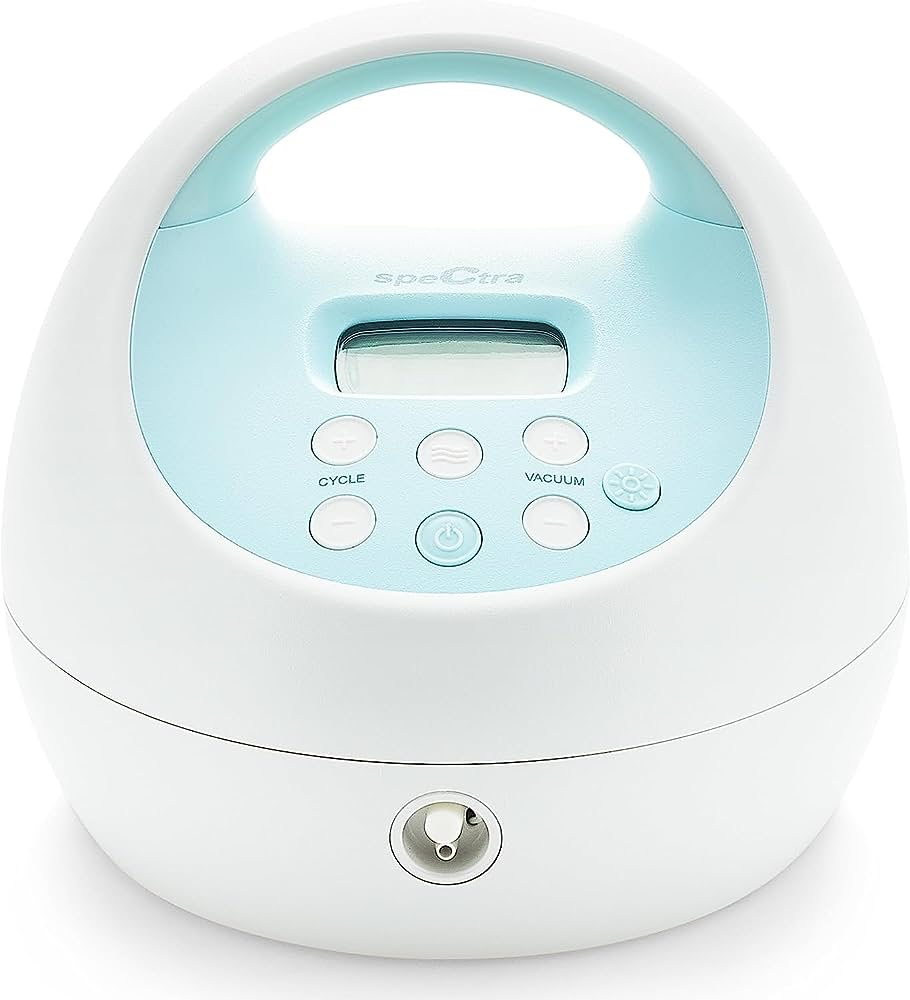
The Spectra series (S1, S2, or Gold) is widely considered by lactation consultants to be a highly reliable brand; another trusted option is the Motif Luna.
Most commercial insurance plans will cover a breast pump, which comes with an initial set of parts.
For most parents, I do not recommend a wearable as their sole pump. While convenient, wearables do not generally have the same level of suction as a standard breast pump, and are not as effective at maintaining supply. It varies quite a bit person to person, and for their unique needs. If you have questions about what pump or pump(s) may be right for your situation, you can book a prenatal or pumping consult to discuss further!
Milk Storage Containers
Once you’ve pumped milk, you’ll need appropriate containers to store it. Options abound:
- the bottles that come with your pump (ideal for pumping into)
- the bottles purchased for your baby to drink from (see below!)
- an insulated cooler bottle such as the Ceres Chiller
- glass jars (optimal for short-term fridge storage)
- single-use plastic milk bags (optimal for fridge/freezer storage)
- reusable silicone containers (optimal for fridge/freezer storage)
This is one that really comes down to personal preference. Most families use some combination of the above. I would recommend having at least one fridge/freezer option on hand from the getgo so that you can easily stash any extra milk you collect in your early weeks postpartum. Please remember that you do not need a massive stash to return to work, but that having a few extra ounces already stored when you begin preparing for the transition can lend some peace of mind.
Bottles (with a sloped nipple)
There are a gazillion bottle choices for parents out there, including lots of new ones that boast a “breastlike” appearance. Let me save you the time spent down the rabbit hole and clarify that there are just a few select bottles out there lactation consultants recommend.
They are:
What do all of these bottles have in common? A sloped, triangular nipple shape. These bottles function most like a breast in your baby’s mouth (your baby does. not. care. if it looks like a breast), which is what matters most for optimal feeding and preventing bottle refusal. Brands with a wide base and a skinny nipple (i.e. Comotomo, Phillips Avent, Nanobebe, etc) promote a shallow latch, which is not ideal when bottle-feeding or breast/chestfeeding.
Flange Sizing Kit OR Return-to-Work Consult
An important prep step that LOTS of parents miss before returning to work is fitting their pump flanges. Correct flange sizing is vital for ensuring have a comfortable pumping experience AND ensuring optimal output. Did you know that even though the standard size that comes in the box is 24mm, but the average size is 17mm? That means LOTS of people ought to be downsizing flange for optimal comfort & output.
LactationHub makes a terrific flange sizing kit that comes with a nipple ruler, flange inserts in common sizes, & lubrication spray. I carry it with me to all consults!
You can purchase one for yourself and self-measure, or you can book a pumping consult and a fitting will be included. I’d recommend this option for a few reasons.
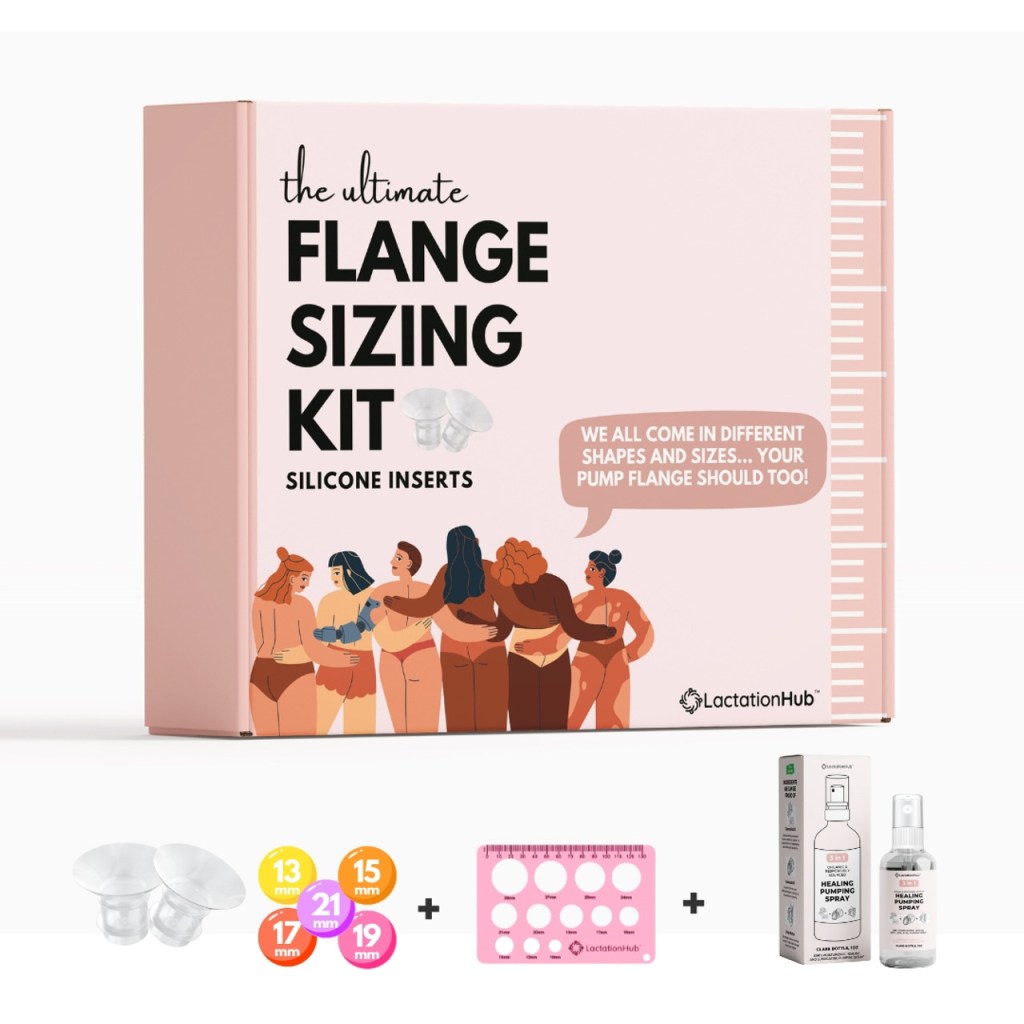
A pumping consult means you don’t have to buy a kit that contains more than you’ll need, and it means you’ll also get a full walkthrough of how to use your pump optimally. In a pumping/return-to-work consult, we talk through the settings on your specific pump, fit your flanges, make sure everything feels comfortable, and cover strategies for maximizing your output. We also go over milk storage guidelines, tips for sending milk to daycare, and what to do if you notice a dip in output. It can be great option for parents returning to work and anxious about pumping for the first time!
Nice-to-Haves:
While none of these are absolutely essential, many of my clients have found them useful. You may decide that adding them to your registry and/or purchasing beforehand is worthwhile – or you can wait and see if you need them. Most are easily found locally or available online.
Milk Collector (i.e. Haakaa Ladybugs, Haakaa)
If you are prone to leaking in the early days and weeks as many new nursing parents are, it can be nice to catch the extra milk to save for any supplementation needs in the short- or long-term. The Haakaa Ladybugs (or similar) are nice because they are passive milk collectors, meaning they do not apply any suction and simply catch the letdown milk from the opposite breast. These are appropriate and can be helpful for anyone.
On the other hand, the original Haakaa is actually considered a pump, because it does apply suction to the breast, even though it is a weak form of suction. If you have reasons to suspect you may struggle with low supply, this may be a useful tool for you; otherwise, most parents should proceed with caution. When applied regularly, the Haakaa can create or exacerbate an oversupply due to extra stimulation. If you do opt to use it, just be mindful of your breast comfort along with your baby’s comfort.
Nursing/Pumping Bra
I’m a big fan of going braless as much as possible in the newborn phase for a few reasons: easier access for baby, improved comfort for mom when other areas may already be uncomfortable, and reduced risk of mastitis or clogs from a poorly-fitting bra. But bras are a thing most of us wear, and many of us are so accustomed to it that it feels weird to go without. Given this, it’s important to choose a bra that meets your needs postpartum. Things to consider:
- Optimal fit/sizing (if you bought a nursing bra based on your size in late pregnancy, you may be surprised to find it no longer fits)
- Comfort – it has never been more important to make sure your bra isn’t pinching in places or too tight, as restrictions to blood flow can increase your risk of clogs or mastitis
- Purpose(s): Do you want just a nursing bra, a pumping bra, or a dual option?
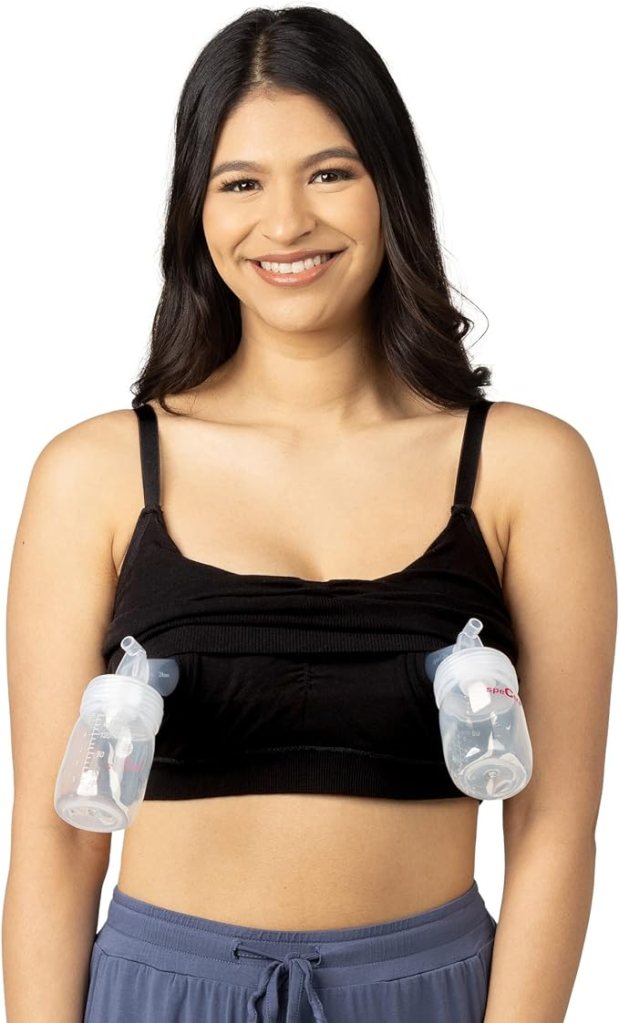
There are lots of great options out there; my favorites happen to be from Kindred Bravely. They make a super soft nursing bra that is comfortable for nighttime wear (if you so choose), and a great nursing-pumping hybrid bra.
If you are returning to work, a pumping bra can be extremely helpful for hands-free pumping while at work.
Oral Syringes
You won’t see this one on most of the lists out there, but it’s one of the cheapest yet most useful investments you can make to get your lactation journey off on the right foot.
Oral syringes can be used to store colostrum harvested prenatally (learn more about how to do this here!). Pregnant bodies generally start producing colostrum around 16 weeks’ gestation, so chances are if you’re pregnant and reading this, you can hand express colostrum and store it for after baby is born. 1ml syringes with caps are ideal for this purpose. You can try this out at home on your own (so long as you are not on pelvic rest – if you are, touch base with your OB/midwife first) or book a prenatal consult to get help with it.
Oral syringes can also be really nice to feed a baby who is unable to latch, isn’t latching well, or is causing the nursing parent pain while latching. The parent can express colostrum or mature milk into any clean container, and use the syringe to feed baby.
Cold Compress
While you don’t need a lactation-specific one, they do make them. You can also just use any old rectangular compress you already have in the freezer. These are helpful to manage engorgement or breast/chest discomfort in the early days and weeks.
Wait to Buy (May Not Need):
Silver Nipple Cups (i.e. Silverettes)
These are expensive and many parents never need them, so I personally don’t recommend purchasing “just in case”. I see them often used as a band-aid for persistent nipple pain. If you have persistent nipple pain, please see a lactation consultant for help!
Pacifier
Pacifiers are a tool that can be helpful for soothing a fussy baby, but aren’t essential for every family. Like bottles, there are a gajillion options on the market, but only a few that IBCLCs recommend to promote optimal oral development.
If you do plan to purchase one ahead of time, avoid a bulb shape and go for either one with a long, skinny shape, or one designed to support oral function, like the ones discussed here.
Nursing Pillow
Yes, another unpopular opinion: you don’t need a nursing-specific pillow. Some people find them helpful, but for most people, you can use any firm, supportive pillow that you already have in your house for support.
Lactation Cookies, Teas, etc.
Most consumer products purported to support lactation, boost milk supply, etc., do not have any evidence to support their efficacy. And they certainly won’t work in the absence of effective milk removal. Most parents have no need for supplementation. Feeding on demand and/or effective pumping is more than enough to maintain a full supply. Furthermore, many of these products actually contain ingredients that may be harmful to supply. And they’re expensive! If you are struggling to achieve or maintain full supply, your BEST option is to see a lactation consultant who can help.
Not Recommended:
Smart Bassinet (i.e. the Snoo)
While this isn’t a feeding-specific item, it’s one of the items most notorious for causing or exacerbating feeding issues in my practice – so I feel a strong need to inform parents about the risks ahead of time. Lactation consultants, OTs, and pediatric chiropractors alike regularly see babies who sleep in smart bassinets like the SNOO with plagiocephaly (flat-head syndrome), torticollis, decreased milk supply, delayed milestones, retained reflexes, slowed infant weight gain, and more. I discuss this in more detail in my post on the truth about smart bassinets.
Babies are meant to wake at night to feed, and need to be able to move freely in their sleep. The tight restraint and white noise override a baby’s ability to show hunger cues and feed on a healthy interval. I encourage you to skip the SNOO and spend your money on a postpartum doula instead!
Lanolin
Lanolin has not been shown to be an effective treatment for nipple healing and may actually increase the risk of infection. Better options include the nipple creams/butters mentioned above, food-grade coconut oil, or simply breastmilk, which has been shown to aid in healing.
Formula Dispenser
Formula dispensers are not a safe option for formula-feeding families for multiple reasons. Most are NOT heating the water to an appropriate temperature necessary to kill bacteria that can be present in the powder, and many have been shown to produce an end product with incorrect ratios of powder-to-liquid, which has SERIOUS health risks to baby, including death. Please skip these products and stick to DIY safe formula prep.
Bottle Sample Packs
Bottle sample packs are readily available at Target, Babylist, and many other places where folks build their registry – but I advocate skipping them. Most of the bottles in these packs are not optimal for oral function. These multi-packs tend to reinforce the idea that babies each have a “preference” for a particular kind of bottle and that you just have to find the right one for baby’s personality – when in fact, there is an optimal bottle nipple shape (as discussed above) and if baby can’t take a bottle, it is much more likely related to oral dysfunction than the bottle itself. Skip the sample pack and invest in optimal bottles for feeding! And if your baby struggles with bottle refusal, find a qualified lactation consultant who can help.
Final Thoughts
Head spinning yet? Remember: you don’t actually have to worry about spending money on anything while pregnant, if you don’t want to!
Except support – please line that up!
You may be thinking: but I read all of these other posts/articles/comments etc. that said I need XYZ! My sister-in-law swore her milk supply only survived because of THIS thing! Don’t I need it?
Everyone’s experience is unique and valid. Lots of folks don’t get access to the level of support they deserve, and find that certain products help to fill in gaps. However, for every success story from a product, there are also countless stories of folks who bought 17 bottles for bottle refusal or 8 types of supplements for milk supply but weren’t able to get where they wanted to be.
As a lactation and infant feeding professional, I’m here to assure you that your most empowered & supported experience is rooted in optimal support. Please find a compassionate and knowledgeable professional near you – or, feel free to reach out if you’d like Integrative Lactation Care to support your journey.
Warmly,
Jill

Quick Links:
Follow Integrative Lactation Care on Instagram
 Integrative Lactation Care
Leave a comment