
Disclaimer: This article is intended for parents of full-term babies, or babies who were born preterm but have since graduated from specialized care. Per usual, this article is not medical advice. Please consult with your healthcare provider about the information discussed below.
It is not uncommon for parents who come into my practice with babies who are struggling with weight gain to have received advice from their pediatric care provider to fortify expressed milk with powdered formula in order to increase their infant’s weight gain.
However, many parents are not given full informed consent about this practice and the risks involved, nor offered alternatives that address the root cause of slow weight gain or weight loss.
Let’s discuss why fortification is recommended by providers, why fortification of human milk is often a short-sighted solution for full-term babies, and alternatives parents can consider.
The most common reason for insufficient weight gain is insufficient intake. The first-line approach to increasing weight gain in the breastfed infant should be to monitor intake and ensure the infant is consuming 24-30oz per 24 hours.
Why Do Providers Recommend Fortification?
Most likely, your provider is recommending fortifying your milk with powdered formula because of a concern for slow weight gain (or weight loss) in your infant. By increasing the number of calories in each bottle, the infant may gain weight accordingly.
However, this ignores the reality that the most common reason for insufficient weight gain is insufficient intake, and that the safest route for increasing weight gain is to increase overall intake.
Consider this:
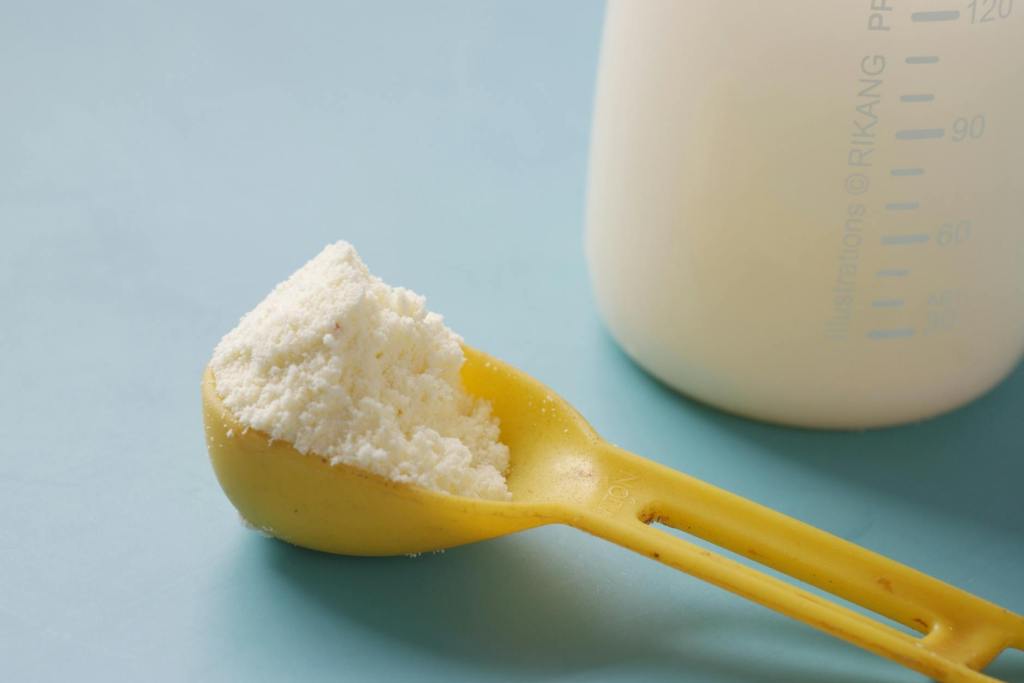
Adding 1/2 teaspoon of powdered formula to 3oz (90ml) of expressed milk adds 22kcal, whereas offering baby an extra ounce of milk provides the same 22kcal.
Many pediatric providers are not trained to assess or remediate functional feeding challenges, and may not know how to support a family experiencing difficult or ineffective nursing, bottle refusal, reflux, oral dysfunction, or other issues that can affect weight gain in either subtle or significant ways.
The most common reason for insufficient weight gain in an infant is insufficient intake.
If an infant is not gaining weight appropriately on their curve, a feeding assessment with an International Board Certified Lactation Consultant (IBCLC) is an appropriate next step.
A skilled IBCLC will inquire about & assess:
- frequency of feedings
- duration of feedings
- gastrointestinal health (reflux, spit-up, gas, stooling, etc)
- feeding difficulties
- milk supply
- feeding efficacy
- oral function
- and more
The IBCLC will then recommend strategies to increase intake and weight gain using the parent’s own milk (incorporating formula if necessary).
The first-line approach to increasing weight gain in the breastfed infant should be to monitor intake and ensure the infant is consuming 24-30oz per 24 hours.
It can usually be determined within a matter of days whether this approach is successful, or not. If the parent is feeding 24-30oz within 24 hours and weight gain is still not appropriate, then the parent should be advocating for a referral from their pediatrician for a comprehensive workup to rule out underlying metabolic issues.
Risks of Fortifying Human Milk with Formula
Fortifying human milk with formula without appropriate monitoring is inappropriate for a number of reasons. It ignores the fact that increasing intake is a much safer approach to increasing weight gain that avoids unnecessary formula supplementation for parents already producing adequate volumes of milk.
If adequate weight gain isn’t happening with adequate intake, it is paramount to understand the underlying reason why. Adding formula doesn’t change the underlying reason, and may be likely to exacerbate an underlying health challenge. If an underlying health issue is present, fortification with formula may be indicated, but then close monitoring should be indicated as well.
Here are some of the risks of fortifying human milk with formula:
1. Nutrient Imbalance
Adding powdered formula to human milk changes the osmolality, or concentration, of the milk. Human milk contains the optimal composition of fats, proteins, and carbohydrates, and electrolytes, which are specifically tailored to an infant’s needs.
Disrupting this balance can lead to over-supplementation of certain nutrients like protein and sodium which may stress a baby’s immature kidneys.
2. Digestive Issues
Breastmilk is easier for infants to digest than formula, and mixing the two can cause gastrointestinal issues like constipation, diarrhea, or gassiness. Introducing cow’s milk protein unnecessarily also increases the risk of a cow’s milk protein allergy.
3. Loss of Human Milk’s Protective Benefits
Human milk contains a host of protective elements that benefit an infant’s immune system. Antibodies, enzymes, and beneficial bacteria are crucial components of breastmilk, and studies have demonstrated that mixing it with formula may dilute these protective factors, reducing their effectiveness.
4. Ignores Safe Formula Preparation
Optimal formula preparation guidelines dictate that formula should be added to hot water in order to kill pathogens that may be present in the powder. When powder is added directly to breastmilk, this step is omitted.
Bottom Line
If your baby is struggling to gain weight, you deserve to understand why – whether it is an issue of milk transfer/intake, or something else entirely.
If fortification is necessary, you can discuss alternatives to powdered formula with your pediatrician such as human milk fortifiers (HMFs) or increasing the caloric density of your milk (skimming the fat off expressed milk).
Need help with feeding?

References:
Alam, A.T., Ijaz, I., Mukhtar, M.U. et al. Comparison of renal growth in breast fed and artificial fed infants: a cross-sectional study. BMC Res Notes 16, 143 (2023). https://doi.org/10.1186/s13104-023-06368-1
Elia S, Ciarcià M, Cini N, Luceri F, Mattei ML, Miselli F, Perugi S, Fanelli A, Dani C. Effect of fortification on the osmolality of human milk. Ital J Pediatr. 2023 Jun 14;49(1):72. doi: 10.1186/s13052-023-01463-2. PMID: 37316866; PMCID: PMC10268382.
Ellis Z, Tan HSG, Embleton ND, et al. Milk feed osmolality and adverse events in newborn infants and animals: a systematic review. Archives of Disease in Childhood – Fetal and Neonatal Edition 2019;104:F333-F340.
Herranz Barbero A, Rico N, Oller-Salvia B, Aldecoa-Bilbao V, Macías-Muñoz L, Wijngaard R, Figueras-Aloy J, Salvia-Roigés M. Fortifier selection and dosage enables control of breast milk osmolarity. PLoS One. 2020 Jun 1;15(6):e0233924. doi: 10.1371/journal.pone.0233924. PMID: 32479524; PMCID: PMC7263599.
Holmes, A. V., McLeod, A. Y., & Bunik, M. (2013). ABM Clinical Protocol #5: Peripartum Breastfeeding Management for the healthy mother and infant at term, revision 2013. Breastfeeding Medicine, 8(6), 469–473. https://doi.org/10.1089/bfm.2013.9979
Natalie A. Strobel, Claire Adams, Daniel R. McAullay, Karen M. Edmond; Mother’s Own Milk Compared With Formula Milk for Feeding Preterm or Low Birth Weight Infants: Systematic Review and Meta-analysis. Pediatrics August 2022; 150 (Supplement 1): e2022057092D. 10.1542/peds.2022-057092D
Quan R, Yang C, Rubinstein S, Lewiston NJ, Stevenson DK, Kerner JA. The Effect of Nutritional Additives on Anti-Infective Factors in Human Milk. Clinical Pediatrics. 1994;33(6):325-328. doi:10.1177/000992289403300602
 Integrative Lactation Care
Leave a comment